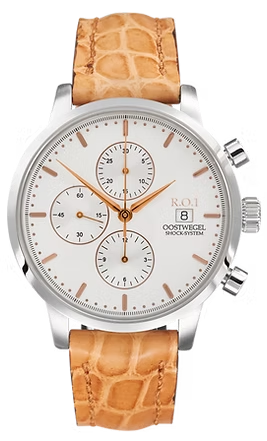
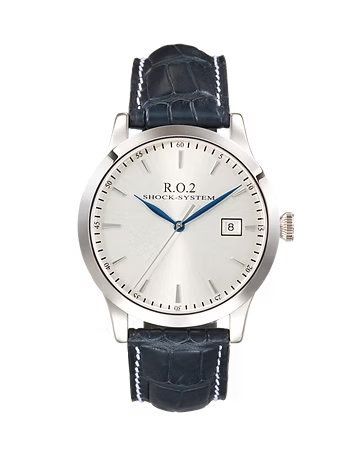
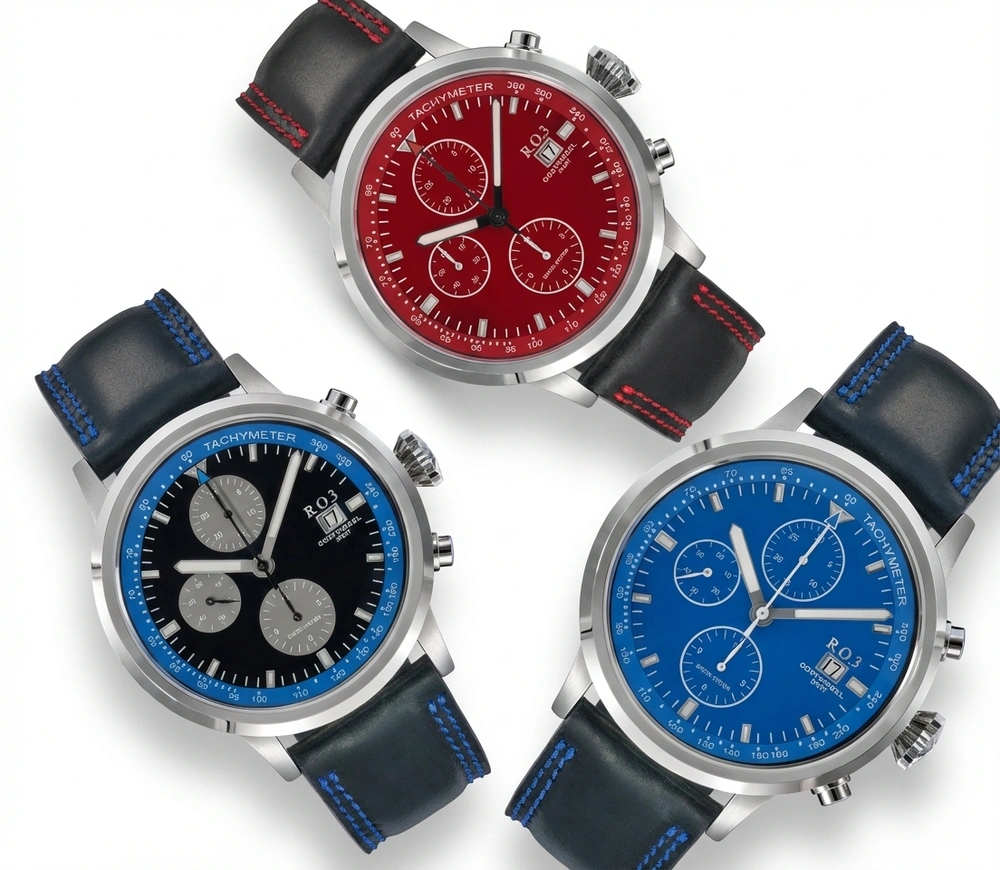
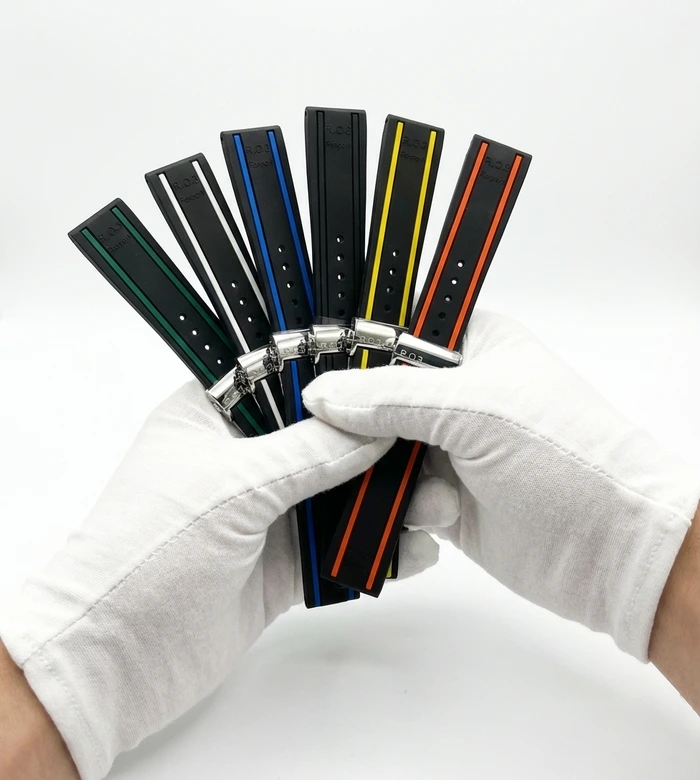
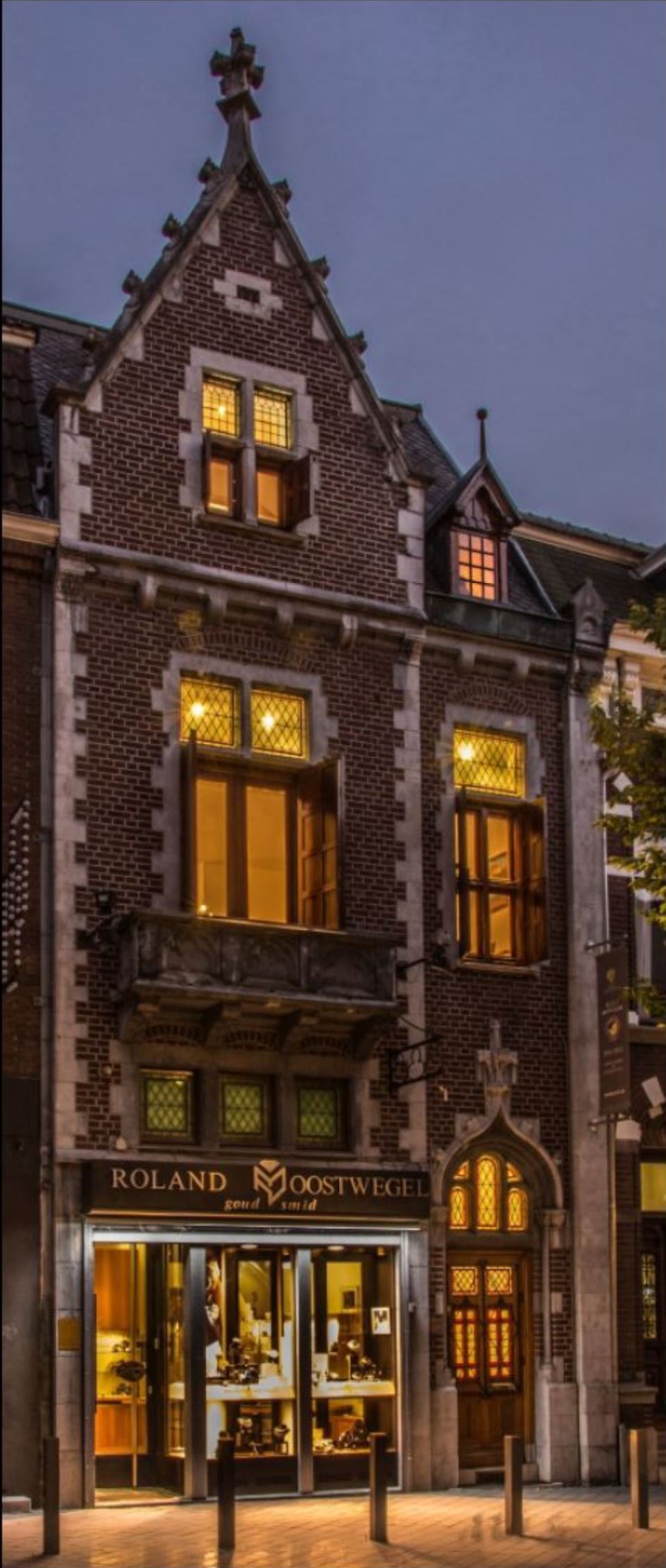
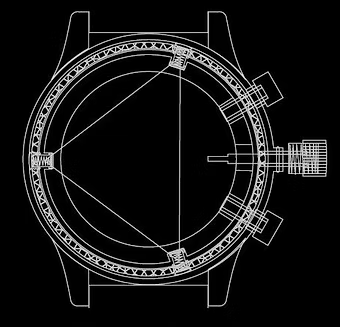
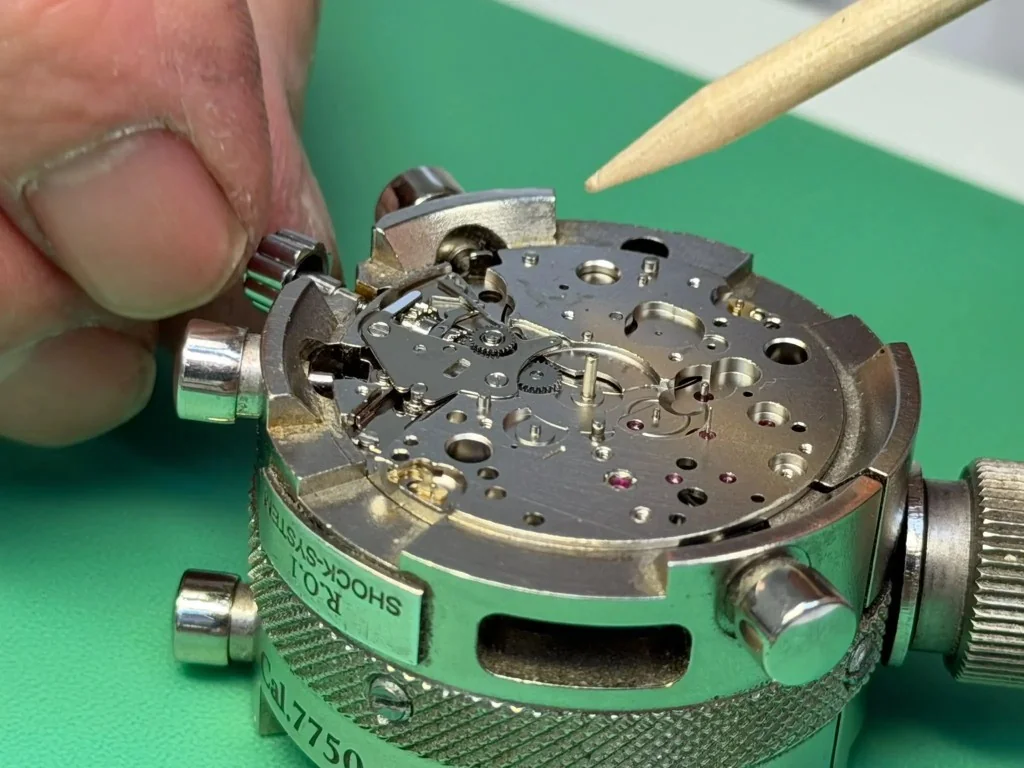
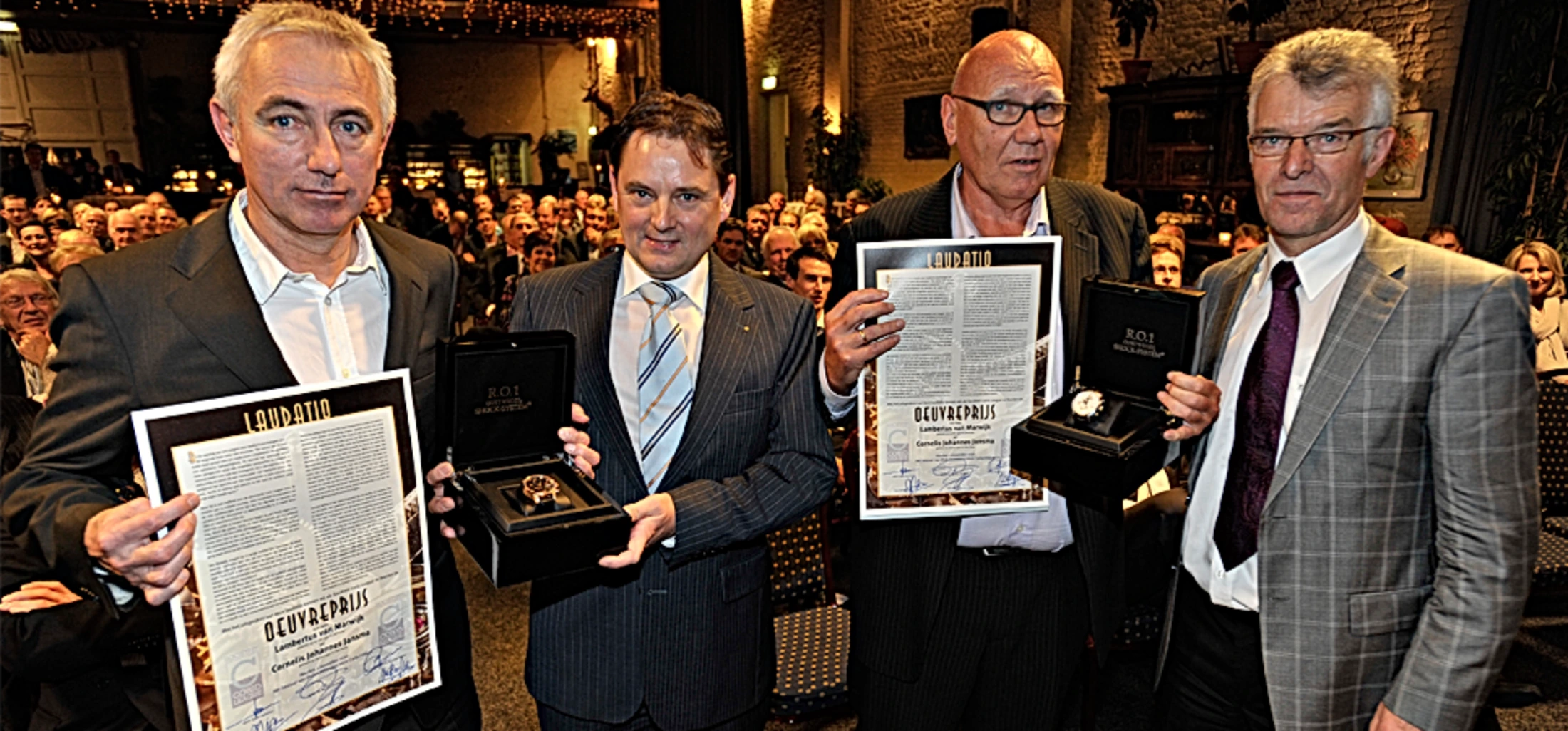
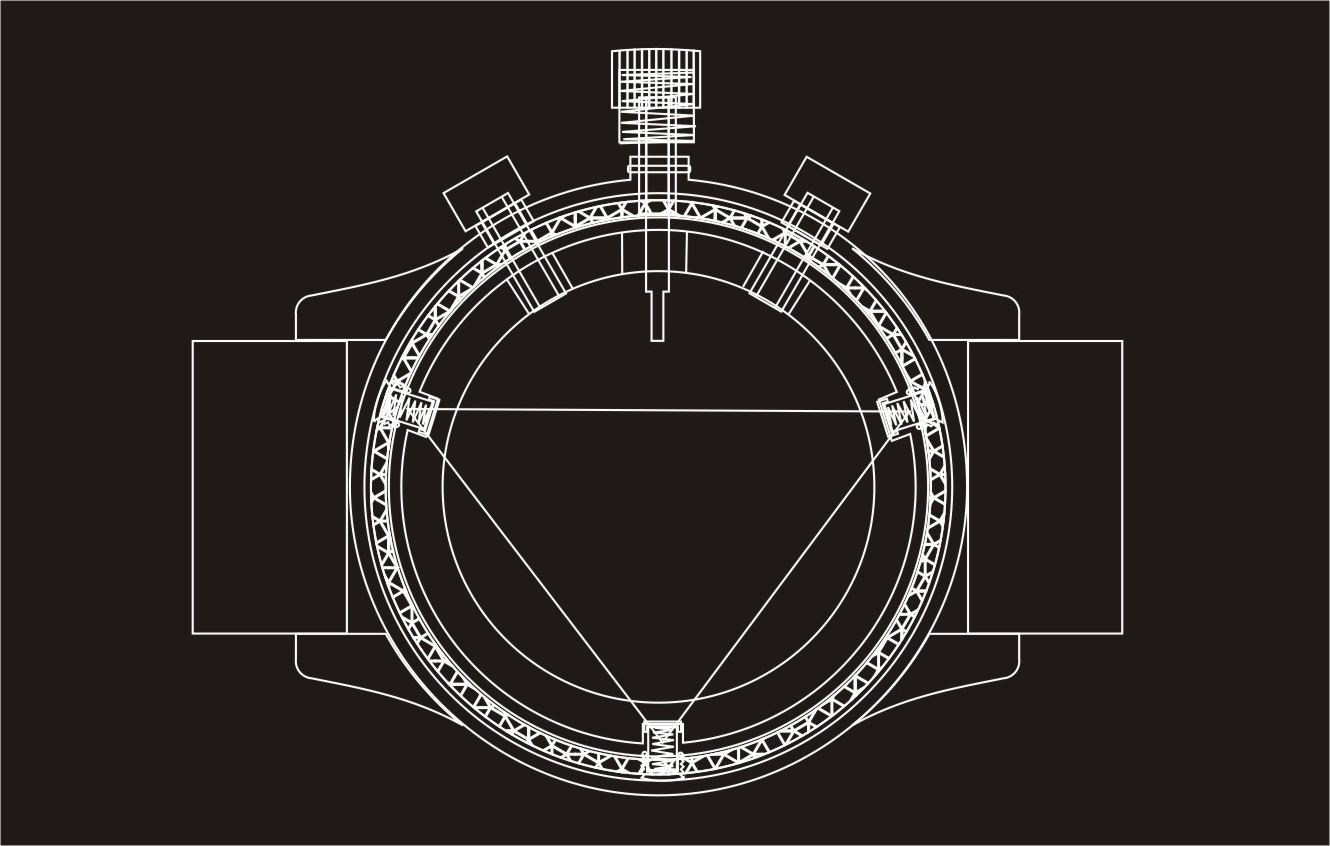
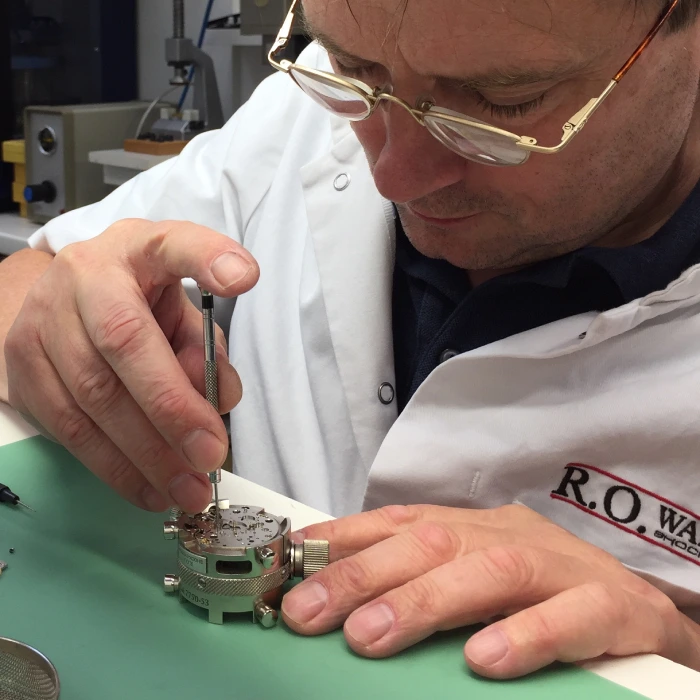
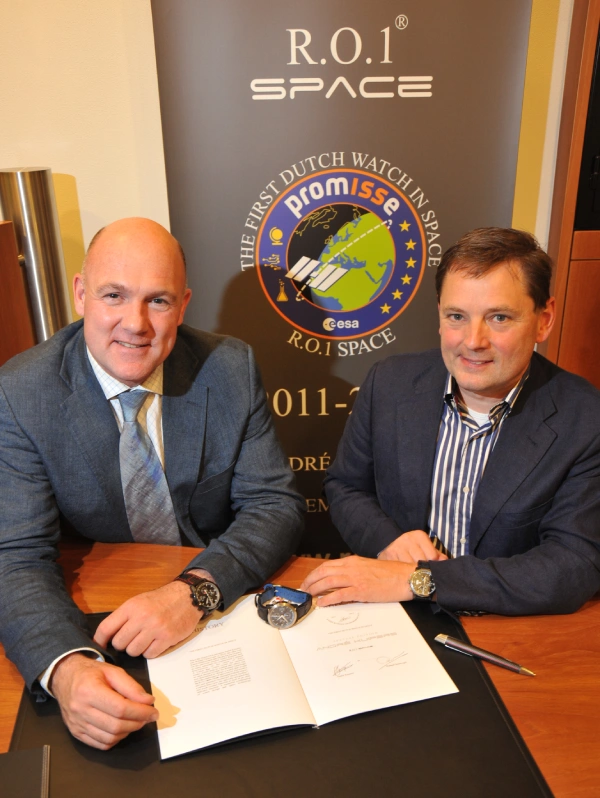
My story does not begin in an observatory or a high-tech laboratory, but in my own atelier in Heerlen. There, amid the quiet of craftsmanship, I developed a Shock-System® I believed in. A system that protects the heart of a watch against forces we rarely experience on Earth. I knew we had something unique in our hands — but that this system would take us beyond the atmosphere? That, at the time, I had only dared to dream.
Below I take you on the journey of the R.O. Space: from the first sketch in Limburg to 128 million kilometres in space.
The search for scientific proof
As a watchmaker you trust your intuition and expertise, but for an innovation like our Shock-System® I wanted more. I wanted the certainty of science. That is why I approached TNO for rigorous drop tests. The results exceeded my own expectations: where a regular movement gave up after a fall of 90 centimetres, our watch was still running exactly within range after a fall of nearly two metres.
Those results opened doors I did not know existed. My discussions with professors about G-forces eventually brought me to the European Space Agency (ESA). There, among the impressive centrifuges and test rigs, the realisation began to sink in: we were working on something that would push the boundaries of traditional watchmaking.
A meeting that changed everything
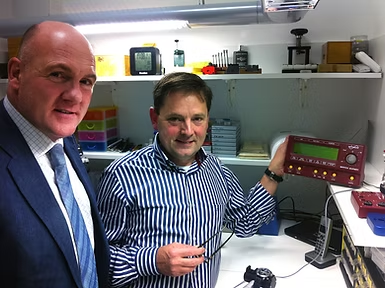
It was at ESA that I met André Kuipers. I remember him as a man of great depth with a genuine fascination for technology. He immediately saw that my Shock-System® was not only relevant for watches, but had potential for spaceflight as a whole.
When André asked what I could mean for him personally during his mission, I felt a deep pride. He told me about the challenges on the ISS: how at enormous speed — 28,000 kilometres per hour — you lose all sense of time. You see the sun rise fourteen times a day. For him I built two specific complications: the Orbit Time Counter and a Day & Week Counter. It was an honour for me to create instruments that would actually support a Dutch astronaut during his work in space.
The demands of the cosmos: carbon and precision
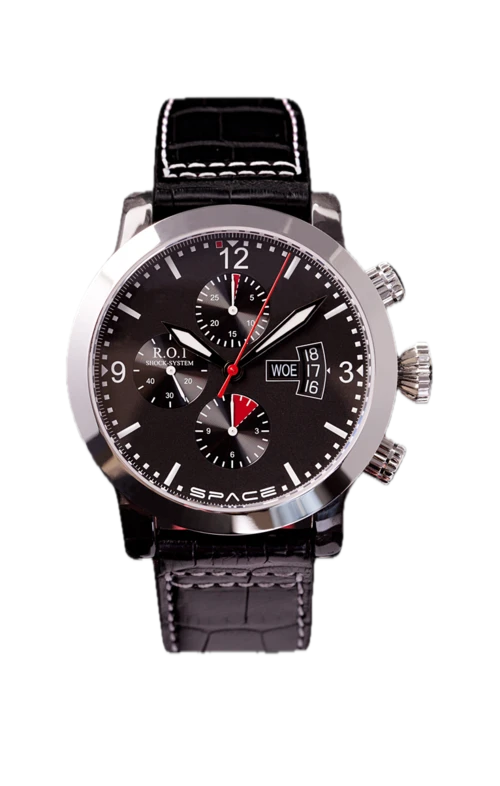
Sending something into space is an exercise in extreme discipline. Every gram counts; every reflection can be disruptive. That is why I chose carbon fibre. This material offered me everything the mission required: it is extremely light, antistatic and produces no reflection.
Beneath the carbon case sits the Valjoux 7750 calibre, which we refined through countless adjustments to chronometer standard. We even built in a ceramic bearing to minimise wear at those extreme speeds. It was a technical process in which no detail was too small to ignore.
128 million kilometres later
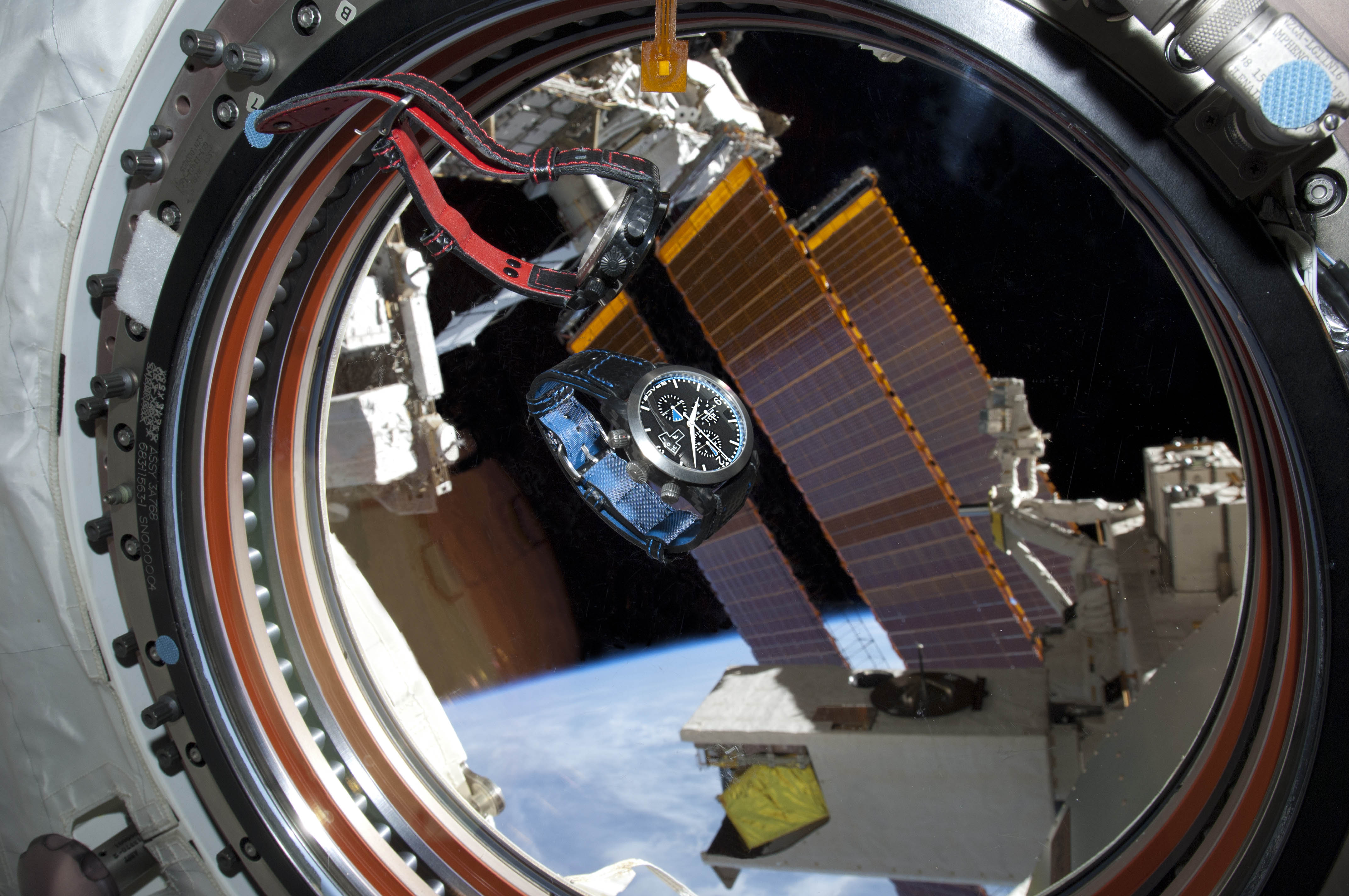
I will never forget the day of the landing in Noordwijk. As André entered the atmosphere in his capsule and the enormous G-forces pounded on him and the watch, I held my breath. It is almost unimaginable that a mechanical instrument still runs perfectly after such a journey.
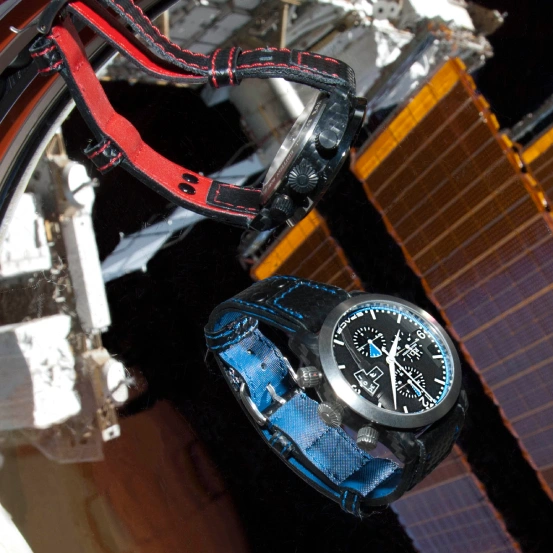
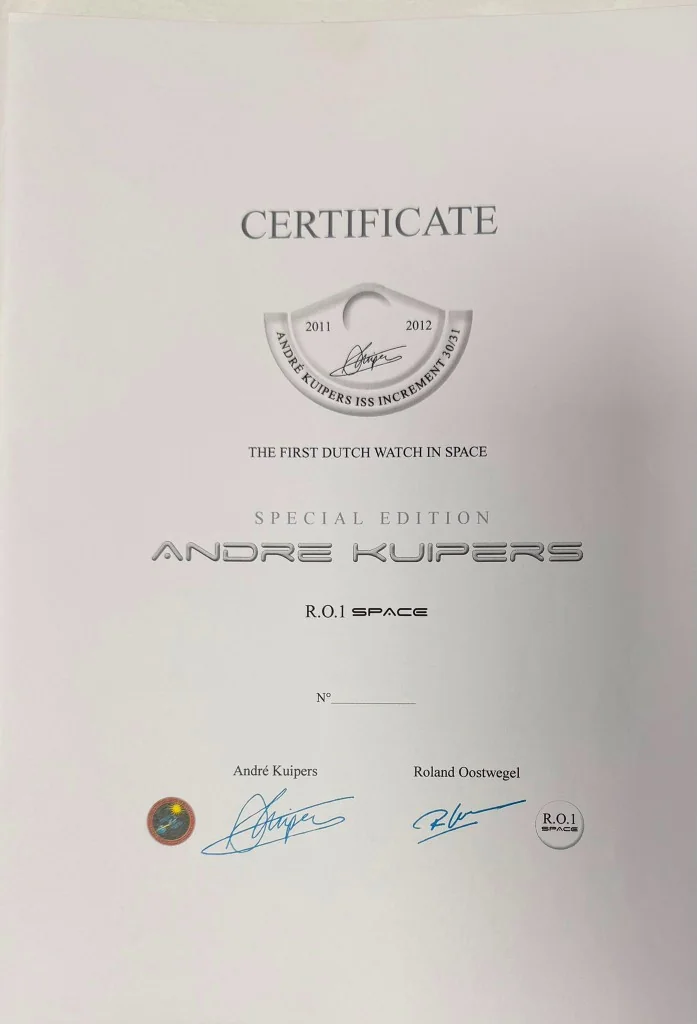
In total the watches spent 193 days in space. In that time they covered more than 128 million kilometres. When we got the watch back after the mission and tested it again, it still functioned flawlessly. That we were able to issue an official certificate for that, I see as the crowning achievement of my work.
A tangible memory of a boundary-pushing mission
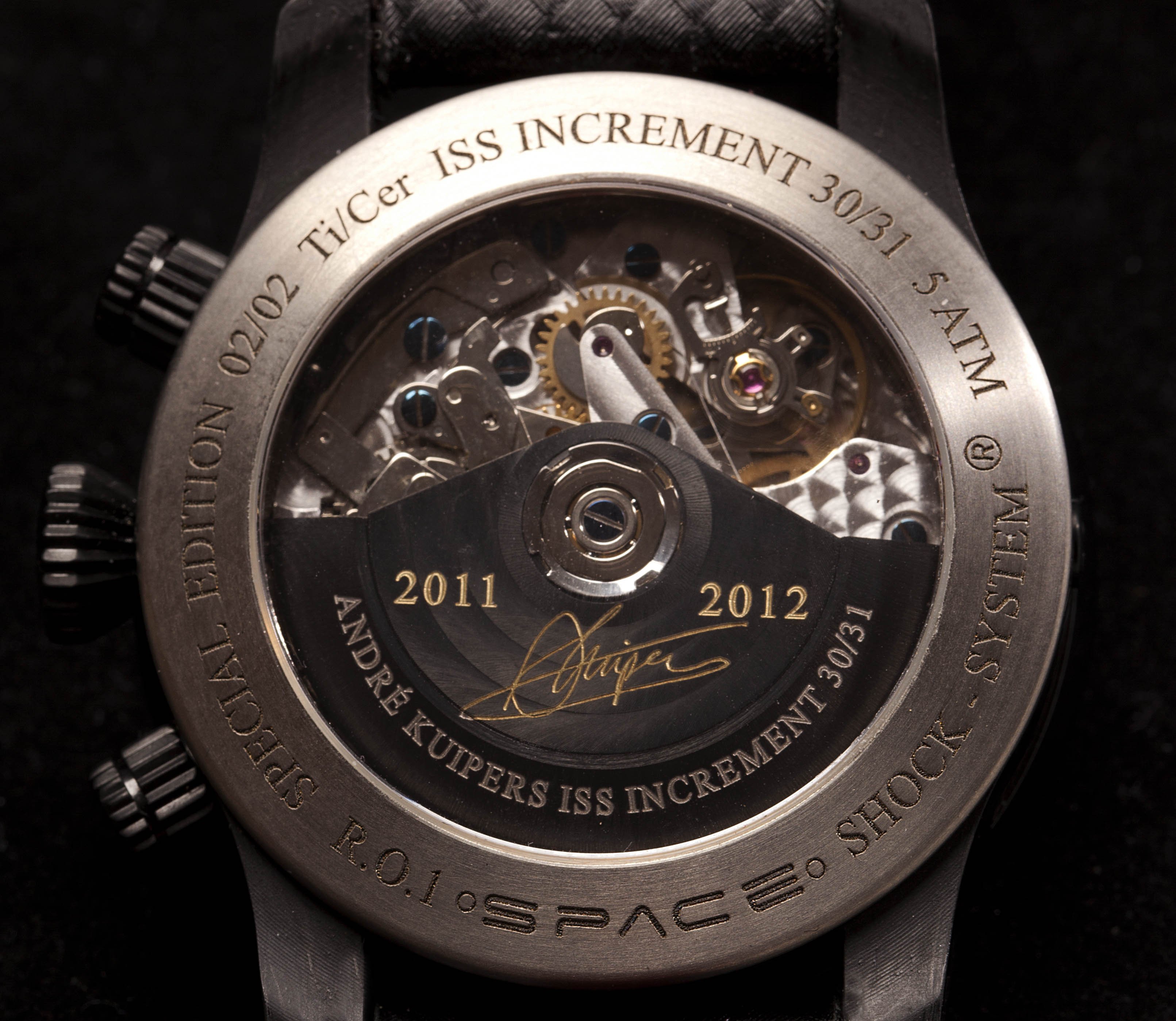
Only two pieces actually made this journey. One watch stayed with André, as a faithful companion of his mission. The other we treasure in our store in Heerlen. It reminds us every day that we, as a Dutch family business, have been privileged to write a special piece of history.
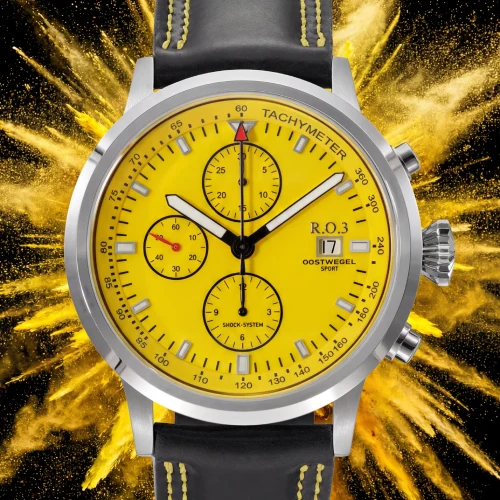
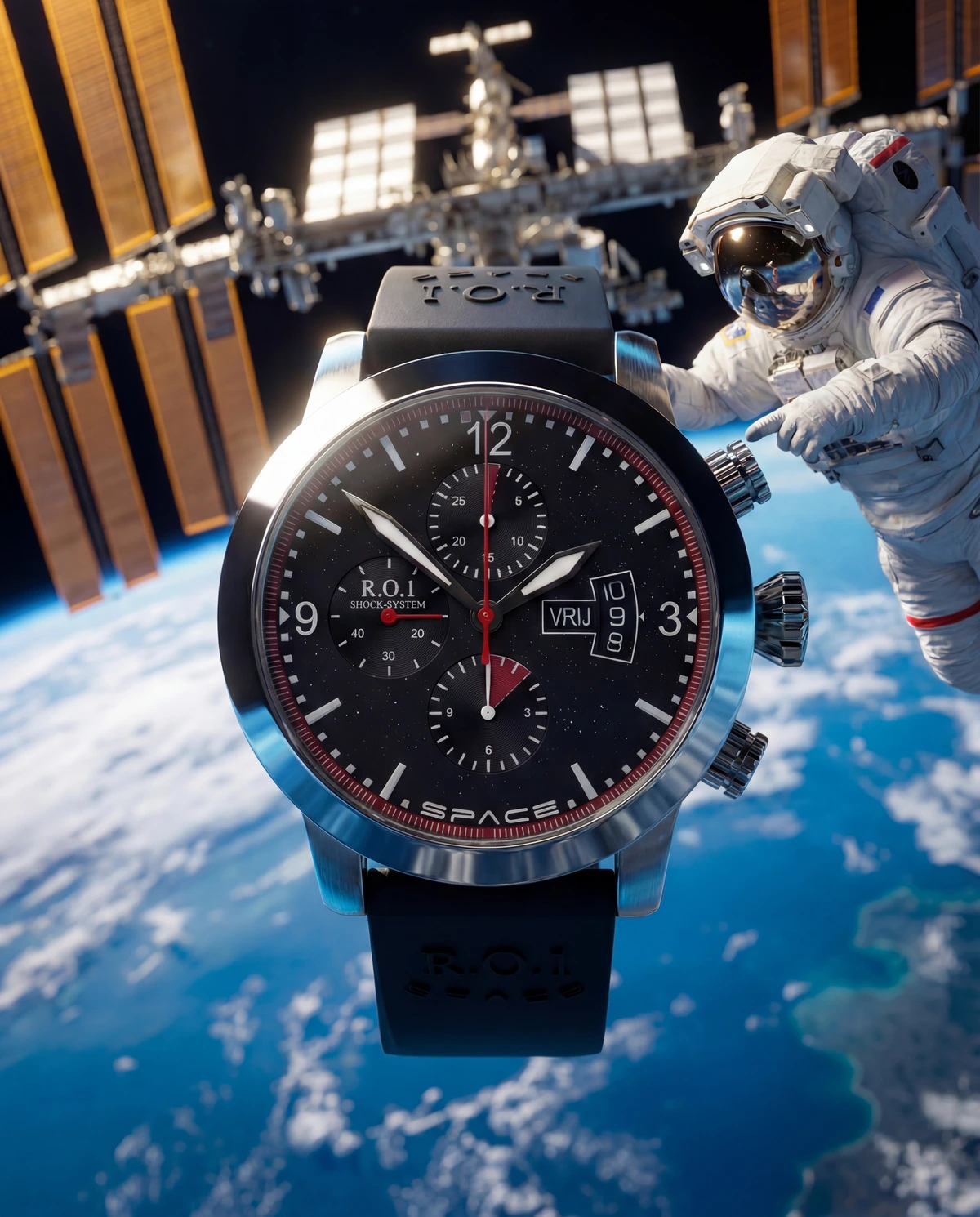
The technology we developed for this unique mission now forms the foundation of our R.O. Space collection. Whether the execution is in steel, titanium, ceramic or precious metal — every watch carries that same DNA of innovation and perseverance.
That we succeeded in getting the first mechanical watch of Dutch origin into space fills me with a deep, quiet pride. The First Dutch Watch in Space is for me the ultimate proof that dedication and craftsmanship from an atelier in Heerlen know no bounds — not even the boundary of our own atmosphere.